How to read more books when you barely have time
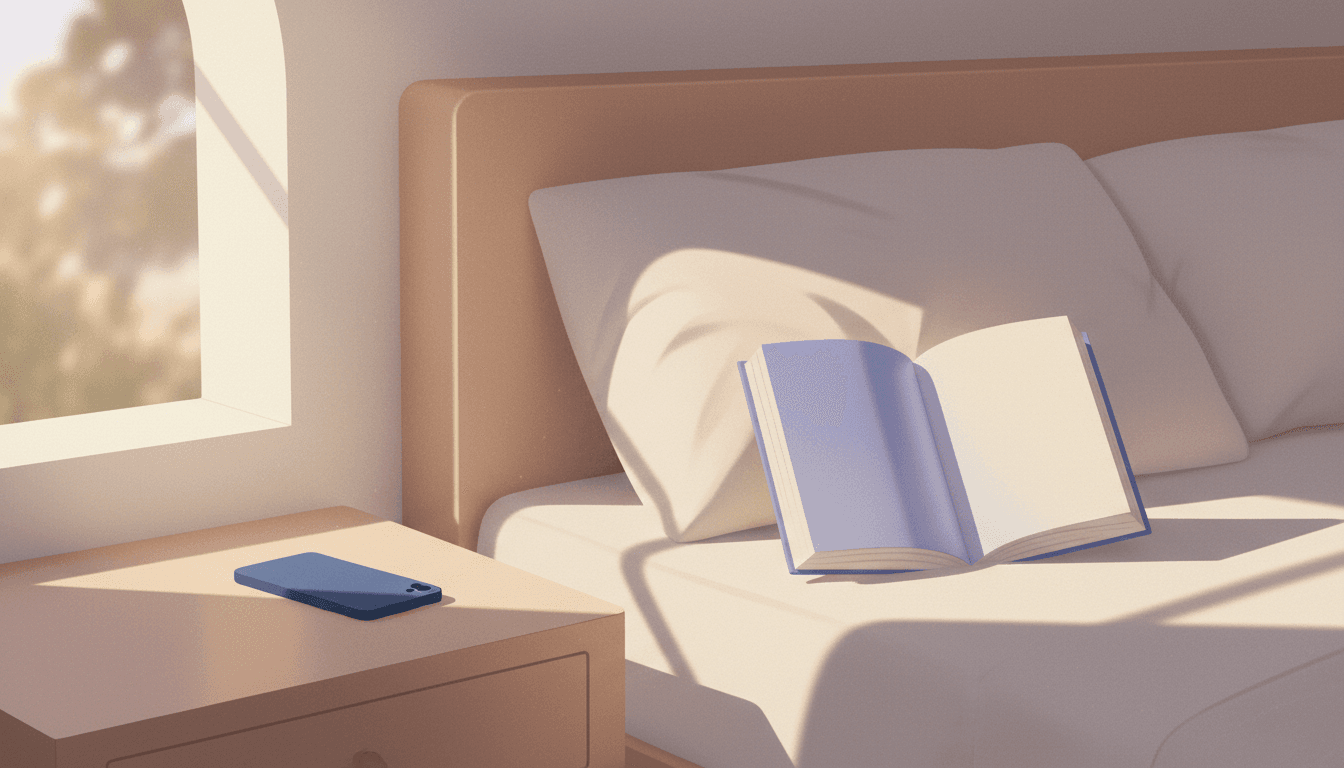
For about two years I had a shelf of books I fully intended to read and mostly did not. New ones kept arriving, the old ones kept not moving, and every night the phone won. If you have ever wondered how to read more books and then watched a month go by having read none, that gap will be familiar, and it is not really about wanting it more. I read across three countries this year without changing how much I wanted to read. What changed was a handful of small, slightly boring adjustments that made picking up a book the path of least resistance instead of the thing I kept meaning to get to.
I am not a fast reader and I do not have a heroic number to sell you. Some months I get through four books, some months one, and a couple of years ago it was close to zero for a long stretch. So this is not a hundred-books-a-year system. It is just what genuinely worked for me, why reading quietly loses to everything else and the changes that made it stick.
Why reading loses to everything else
Reading rarely loses to a big dramatic reason. It loses to the phone, in the small gaps where a book could have gone. The five minutes in a queue, the ten before sleep, the twenty on a train. Each gap is tiny and the phone is right there, already unlocked, already showing me something. A book asks slightly more of me at exactly the moment I have the least to give.
The other reason is that reading has no default slot. I have a slot for coffee, for a run, for work. Reading was always the thing I would get to once the day was done, and the day is never quite done. Anything without a home in the day gets done by whoever remembers, and by evening I do not remember. Naming that was half the fix. Reading was not competing on willpower, it was competing on convenience, and it was losing on convenience every single time.
Make a book the easiest thing to reach
Most of what I changed comes down to one idea I use in the apps I build: make the thing you want frictionless and make the thing you do not want a bit harder. For reading that is almost physical. I keep a book on the pillow, not on the shelf, so it is what my hand lands on at night instead of the phone. I moved the phone charger to the other side of the room. Small, slightly annoying, and it works, because at eleven at night I will read the book within reach before I will cross a cold floor for the phone.
On the digital side the same rule holds. The reading app lives on my home screen where a social app used to be, and the social apps are now in a folder on the second page. I did not delete anything or install a blocker. I just added a few seconds of friction to the scroll and took a few seconds off the read, and the balance tipped. That is usually all it takes.
Steal the slots you already lose
The best reading time I have is time I used to waste. I do a lot of my reading in transit, on trains and buses and in the dead half hour before a flight, because I move between places a fair bit and those gaps used to go entirely to my phone. Now they are the most reliable reading I get. A long bus in Taiwan is two chapters. A delayed flight is a proper dent in a book.
You do not need to be travelling for this. The slots are the same everywhere. The queue, the wait for a kettle, the ten minutes before someone arrives. I stopped trying to carve out a noble hour of reading, which never survived contact with a real week, and started filling the offcuts instead. Five minutes here, fifteen there. It adds up faster than one protected hour I never actually protected.
Give yourself permission to quit books
The single biggest change to how much I read was letting myself abandon books. I used to treat starting a book as a contract. If I was two hundred pages in and bored, I would grind on out of some misplaced duty, reading slower and slower, until I was not really reading at all, just feeling bad about the book on the pillow. One stalled book can cost you a month.
Now I give a book about fifty pages, and if it is not earning its place I put it down without ceremony. Putting a book down just means it was a bad match. The paradox is that quitting more books made me read more of them, because a book I am enjoying reads itself, and a book I am enduring stops me reading anything at all. Be a bit ruthless. There are more good books than you will ever get to.
A book you are enduring does not just go slowly, it stops you reading anything else.
If putting a book down still feels wrong, park it rather than bin it. Half the time you come back a year later and it finally clicks.
Pick the format that gets out of your way
People treat this as a loyalty question, e-ink or paper or tablet, and it is really just a friction question. Whichever one you actually pick up is the right one. I read on all three depending on where I am. Paper at home when I want to be off a screen, a Kindle for travelling light, an iPad when I want colour and the highlights to back up somewhere. None of them is perfect and I have gone back and forth on it more than I would like to admit.
The only wrong choice is the one that adds a step. If your e-reader is always flat, or the paperback is too big for your bag, or the app takes four taps to get back to your page, that is a tax you pay every session and it slowly wins. Remove the step, whatever it is. I have written about the Kindle versus iPad side of this on its own, so I will not relitigate it here.
Count books, do not build a system
I keep the lightest possible track of what I read, because I run most of my life out of Notion and I know exactly how this goes wrong. A simple list, the title and the month I finished it, nothing more. No star ratings I agonise over, no tags, no reading-stats dashboard. The list exists so I can glance back and see the year was not empty, not so I can optimise it.
I say this as someone who has built the over-engineered version of every personal system and buried it. The tracking is not the reading. The moment logging a book feels like more effort than starting the next one, the log has failed, and I strip it back to a plain list. Read the book. Write the title down. That is genuinely the whole system.
None of this is about hitting a number. I do not really care whether it is twelve books a year or forty. What I care about is that most evenings now I read a few pages instead of scrolling until I am tired but not rested, and that on a long train I reach for a book by default. That swap is the entire thing.
The one problem it created is a nicer one to have. Once I was actually reading again, I noticed how much of the good stuff evaporated a week later, the lines I loved gone with the book back on the shelf. That is the thing I am building annote to fix, and it is a subject for another day. For now, put a book where your phone usually is tonight and see what happens. That single move did more for me than any amount of wanting to read more books ever did.
Start with tonight. One book, one arm's reach away. You can sort the rest out once you are actually reading again.
annote
Your paper books, remembered. Snap a highlight and annote turns it into a card you can search and review, so the best lines don't stay trapped on the shelf.

More from the devlog.
How to validate an app idea when you're building it solo
Most advice on how to validate an app idea is survey theatre. Here is the honest version from building three apps solo: test what people do, not what they say.
How to keep in touch with family and friends across time zones
When the people you love are five or nine hours away, staying close stops being about effort and starts being about a few systems. Here is what actually keeps me in touch across time zones.