How to remember what you read from a paper book
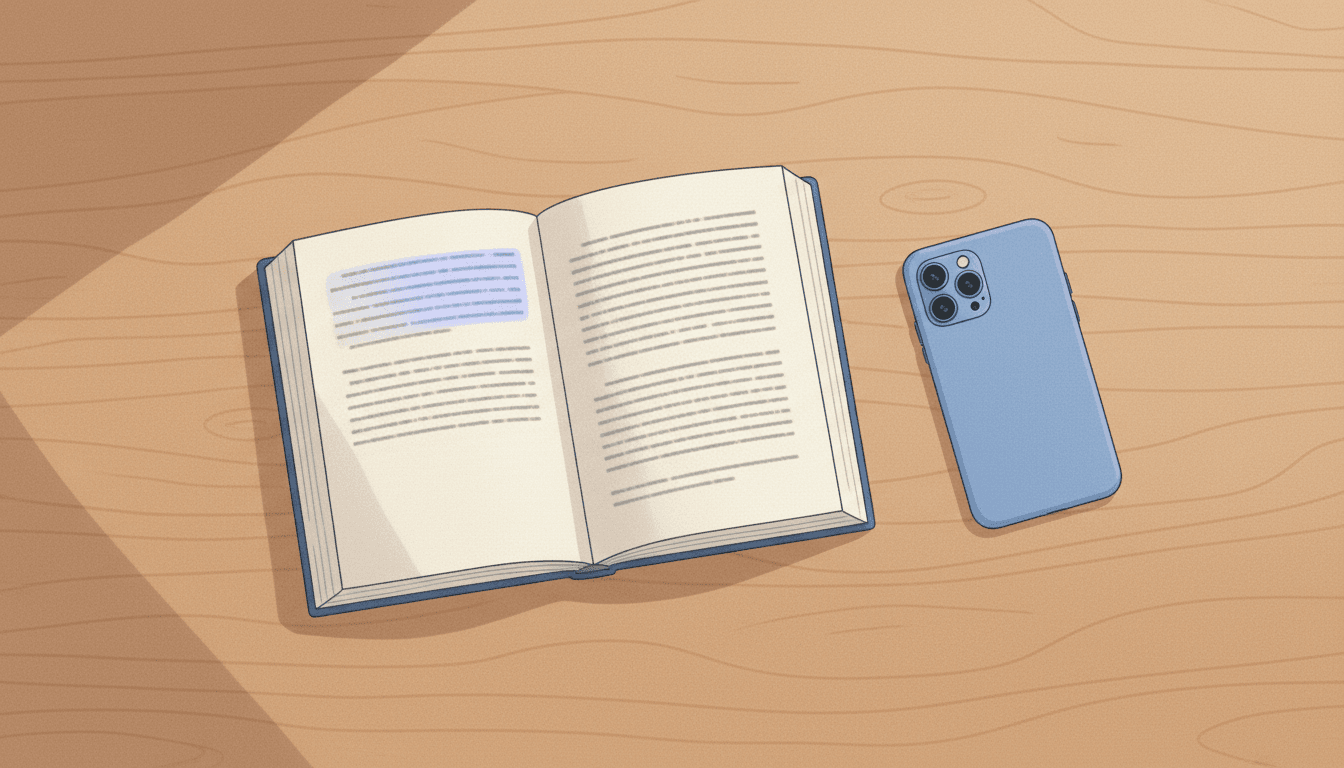
I have a shelf of books I have definitely read and could not tell you much about. Not because they were bad. I read them properly, underlined the good lines, nodded along at the right moments. Then a year went past and most of it quietly drained away. If you have ever tried to recommend a book to a friend and managed only "it was really good, there's this one idea, hang on", you know the feeling.
So the thing I kept circling back to was practical, not philosophical. How to remember what you read, not in some ideal study setup, but in the messy way reading actually happens, on trains, half asleep, with three books on the go at once. I have tried most of the obvious answers, kept the few that survived contact with real life and built a small thing to patch the gap the rest left behind.
Highlighting feels like remembering. It barely helps.
Here is the trap I lived in for years. You read a great sentence, you highlight it or underline it, and a little hit of "got it" lands somewhere in your brain. The idea feels saved. Filed away safe. So you move on, slightly pleased with yourself.
The problem is that the highlight did almost nothing for your memory. You marked the page, you did not do anything with the idea. A few weeks later the book is back on the shelf, the line is still sitting there in yellow and the thought it pointed at is gone. I had hundreds of these. Lovely highlights in books I could not summarise to save my life.
What actually helps you remember what you read
The stuff that genuinely works is not new, and it is a bit annoying, because it asks for effort at the exact moment you would rather just keep reading. Three things do most of the lifting.
- Say it back in your own words. Close the book at the end of a chapter and write a sentence or two on what it was actually about, without peeking. If you cannot, you did not really have it yet, and it is good to find that out now rather than later.
- Space it out. Come back to your notes a few days later, then a couple of weeks after that. Each time you drag the idea up from memory it gets a little more permanent. This is the part highlighting skips entirely.
- Hook it onto something. A book sticks when you can tie it to a thing you already know, or argue with it, or use it for something real. One genuine connection beats ten passive highlights.
None of that is clever. It is just active recall and a bit of spacing, the same thing that works for anything you want to keep in your head. The hard part was never knowing it. The hard part is doing it when you are tired and the next chapter is right there.
A highlight is a bookmark for your attention, not a memory. The remembering happens later, when you make yourself do something with it.
My actual reading setup: paper, Kindle and iPad
I read across three formats and none of them is perfect, which I have made peace with. Kindle is the easiest for remembering, in one narrow sense: the highlights are already digital, so I can pull them out and review them later without retyping a word. Paper is the nicest to actually read and the worst for getting the good lines back out, because they are stranded on the page. The iPad sits in the middle, and is where I have landed for anything I am reading closely, because I can colour-code highlights, back them up and not have them stuck on one device.
Wherever a highlight starts, it ends up in the same place. Every week or two I move the lines worth keeping into Notion, in my own words where I can be bothered, and that small act of retyping and reshaping does more for my memory than the original highlight ever did. It is dull. It also works.
Taking notes on physical books is the part that breaks
Paper is where this falls apart for most people, me included. You can review Kindle highlights in a couple of taps. A paper book hands you a pile of underlined pages and no easy way to get them back without copying each one out by hand, which almost nobody keeps up for long. The good lines just sit there on the shelf.
That gap is the reason I started building a small app called annote. The idea is as close to frictionless as I could make it: photograph a highlight from a paper book, it turns the text into a card you can search and then brings those cards back for review with spaced repetition, the way Readwise does for digital highlights. It is still coming together, and I am not going to pretend it is the only way to do this. It came straight out of my own shelf of underlined books I never reopened, which is usually a fair sign the problem is real.
If you would rather not use an app at all, the manual version is fine. A notebook or a Notion page where you copy out the handful of lines that actually mattered, once, a week or so after you finish the book.
A simple system you can start today
If you want one thing to try, try this. It is light enough to keep up, which matters far more than whether it is optimal.
- While reading, mark the lines that land, but do not kid yourself that marking is the job.
- At the end of a chapter or a sitting, write two or three sentences from memory on what it said and why you cared.
- A few days later, reread just your notes, not the book, and fix anything you got wrong.
- Move the few keepers somewhere you will genuinely look again, in your own words. For paper books, photograph the lines so they are not stuck on the shelf.
That is most of it. Recall, a little spacing and getting the good lines out of the book into a place you revisit. That, more than anything, is how to remember what you read. The format you read in matters much less than whether you ever come back to what you marked.
I still forget plenty. I am not going to sit here and claim I remember every book now, because I do not, and the ones I read purely for fun I am happy to let wash over me. But the books I actually wanted to keep, I keep more of, and the difference was not reading more or highlighting harder. It was doing a small, slightly boring thing after reading, instead of saving it all for some review session that never comes.
If your own shelf is full of underlined pages you have not looked at since, start with the next book, not the backlog. One book, two or three sentences from memory, one review a week later. See whether it sticks. I think it will.
annote
Your paper books, remembered. Snap a highlight and annote turns it into a card you can search and review, so the best lines don't stay trapped on the shelf.

More from the devlog.
Voice memo journaling: what works, and where it quietly falls apart
I used my phone's voice recorder as a journal for a year. Capturing thoughts was easy. Reading them back was where voice memo journaling quietly fell apart, and here is what I do about it now.
How to find the best time to call someone across time zones
The weekly call home kept slipping, and "sorry, did I wake you" got old fast. Here is how I find the best time to call across time zones now, after years of getting it wrong while living abroad.