How to come up with an app idea worth building on your own
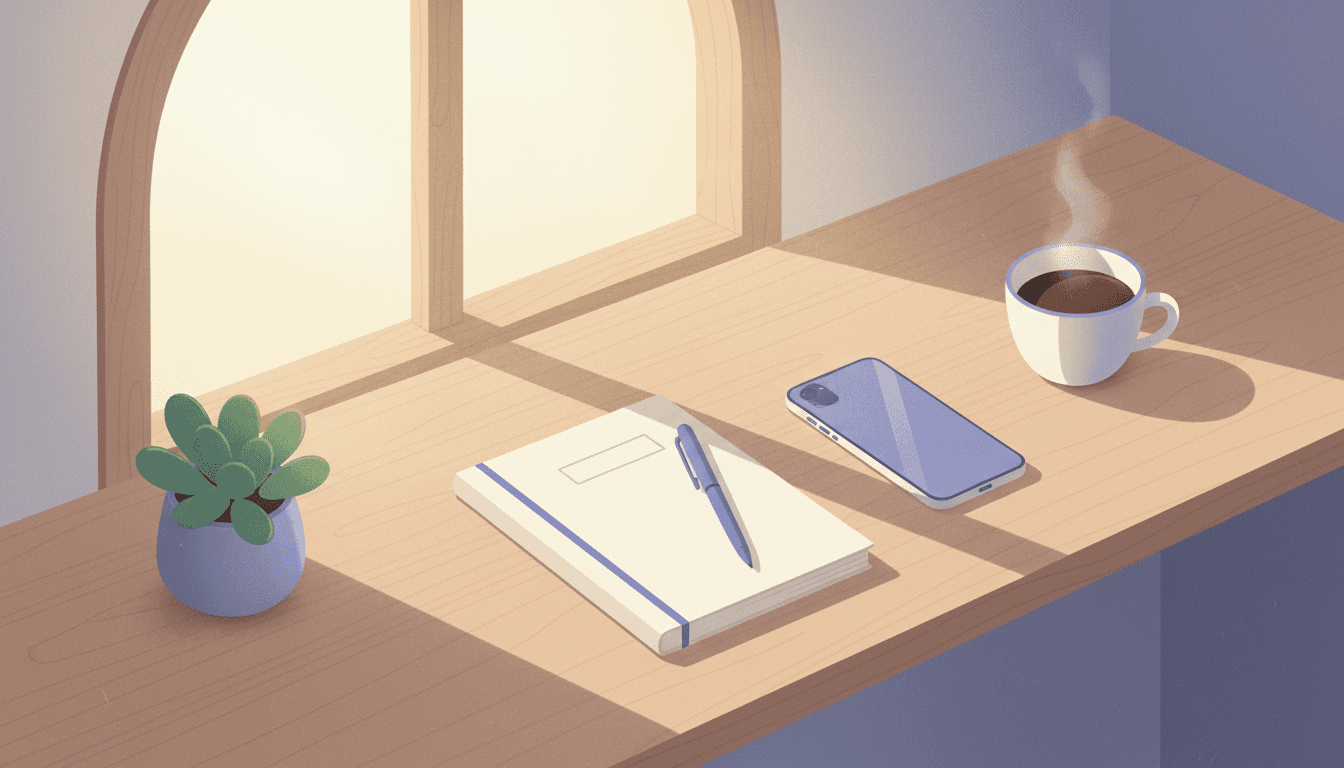
I don't sit down and brainstorm app ideas. I have tried, with a blank Notion page and a coffee and the honest intention of filling it, and what I get back is a list of things that sound clever and that I would never actually use. So when people ask how I come up with an app idea, the truthful answer is that I mostly don't. The idea turns up while I am trying to get something else done, and the app is just me refusing to put up with the friction one more time.
Start with an itch you actually have
Luna Journal came from standing on a station platform with a thought I wanted to get down, and giving up after the fourth tap. Meridian Clock came from doing timezone maths in my head at 2am and still getting a call wrong. annote came from a shelf of books I loved and could not quote a single line from. None of those were ideas in the brainstorm sense. They were the same small itch turning up often enough that I got tired of it.
That is the oldest advice in indie building, scratch your own itch, and it is right as far as it goes. When the problem is yours, you already know the shape of it. You don't need a survey to tell you where it hurts, because you are the one it has been hurting. You notice the ten small details a distant product manager would miss, because you feel them every time you reach for the thing.
The trap of building for one person
Here is where the advice quietly breaks, though. Scratching your own itch tells you the problem is real for you. It tells you nothing about whether it is real for anyone else. I have talked myself into ideas that were genuinely useful to exactly one human on the planet, and that human was me, and I only worked it out three weeks in.
So I do one cheap check before I let myself get attached. Not a landing page, not a poll, nothing that pretends to be data. I go and look for other people complaining about the same thing. App store reviews are the best place for it, the one and two star ones especially, where people tell you in plain, annoyed language exactly what a whole category of apps gets wrong. If I can find a dozen strangers describing my itch without me prompting them, that is usually enough to keep going. If I search for a fortnight and it is only ever me, that is a hobby and not an app, and it is a lot better to know that early. It is the closest thing I have to a way to validate an app idea before I have built any of it.
The three questions I run an idea through
Once an itch has survived that, I put it through three questions before I open a code editor. They are boring on purpose. Boring is what stops me building something I will resent in a month.
- Is the itch shared? Not whether it could be huge, just whether enough other people clearly have it too. A small, real audience beats a large, imaginary one.
- Can I build and maintain this on my own? I am one person. If the idea needs a team, a server I have to babysit or a pile of other people's data to hold, it is the wrong idea for me even when it is a good idea for somebody else.
- Will I still care in a year? Most of the work happens after the fun part. If I can't picture myself fixing a dull bug in this thing next winter, the excitement I feel now is a bad guide.
That last one has saved me the most time. I get excited easily, and excitement feels exactly like conviction right up until about week three, when the novelty wears off and you find out whether you actually wanted to build the thing or just wanted to have built it.
The useful muscle isn't having ideas. It is being honest about which ones you will still care about when they stop being fun.
The ideas I didn't build
For every app that made it out, there are a few that didn't, and killing them was the right call. There was a habit tracker I was sure about for a week, until I admitted the market already has a few hundred good ones and my only new idea was a nicer colour scheme. There was a little tool for splitting bills with the people I travel with, which failed the maintenance question the moment I realised it needed everyone else to have it too, and a solo builder has no business picking a network-effect fight.
Neither of those was a bad idea in the abstract. They were bad ideas for me, right now, on my own, and learning to tell those apart is most of the skill. The romantic version of building is that you get one brilliant idea and chase it to the end. The real version is that you get plenty of ideas, and the thing that matters is saying a quiet no to the ones that don't clear the bar.
Where good app ideas actually come from
If there is a method under all of this, coming up with an app idea is mostly just paying attention. The ones worth building tend to arrive disguised as small irritations you have stopped noticing. The workaround you do every day without thinking. The app you keep half-using and grumbling about. The spreadsheet you built to patch over something no product does properly. Those already have an itch attached, which is half the work done for you.
I keep a running note of them, one line each, no pressure to act on any of it. Most never go anywhere and that is fine, because the note is not a to-do list. It is a way of catching the thought while it is still warm, before it drifts off the way most half-formed ideas do. Every so often the same line shows up three times in a month, and that repetition is the signal. When an annoyance keeps coming back, it is telling you it is not going to fix itself, and that is usually where I start.
None of this guarantees anything. Plenty of well-filtered ideas still go nowhere, and I have been wrong more than once about which of my own itches other people share. But it has kept me from pouring months into things I would have quietly abandoned, and for a one-person studio that saved time is close to the whole game. Build from something that genuinely annoys you, check that it annoys other people too, and be honest about whether you will still care when it stops being fun. The rest is just doing the work.
If you take one thing from this, keep the running note. Half the ideas I am glad I built were sitting in it for months before I understood they mattered.

More from the devlog.
Voice memo journaling: what works, and where it quietly falls apart
I used my phone's voice recorder as a journal for a year. Capturing thoughts was easy. Reading them back was where voice memo journaling quietly fell apart, and here is what I do about it now.
How to find the best time to call someone across time zones
The weekly call home kept slipping, and "sorry, did I wake you" got old fast. Here is how I find the best time to call across time zones now, after years of getting it wrong while living abroad.