Spaced repetition for reading: how I remember paper books
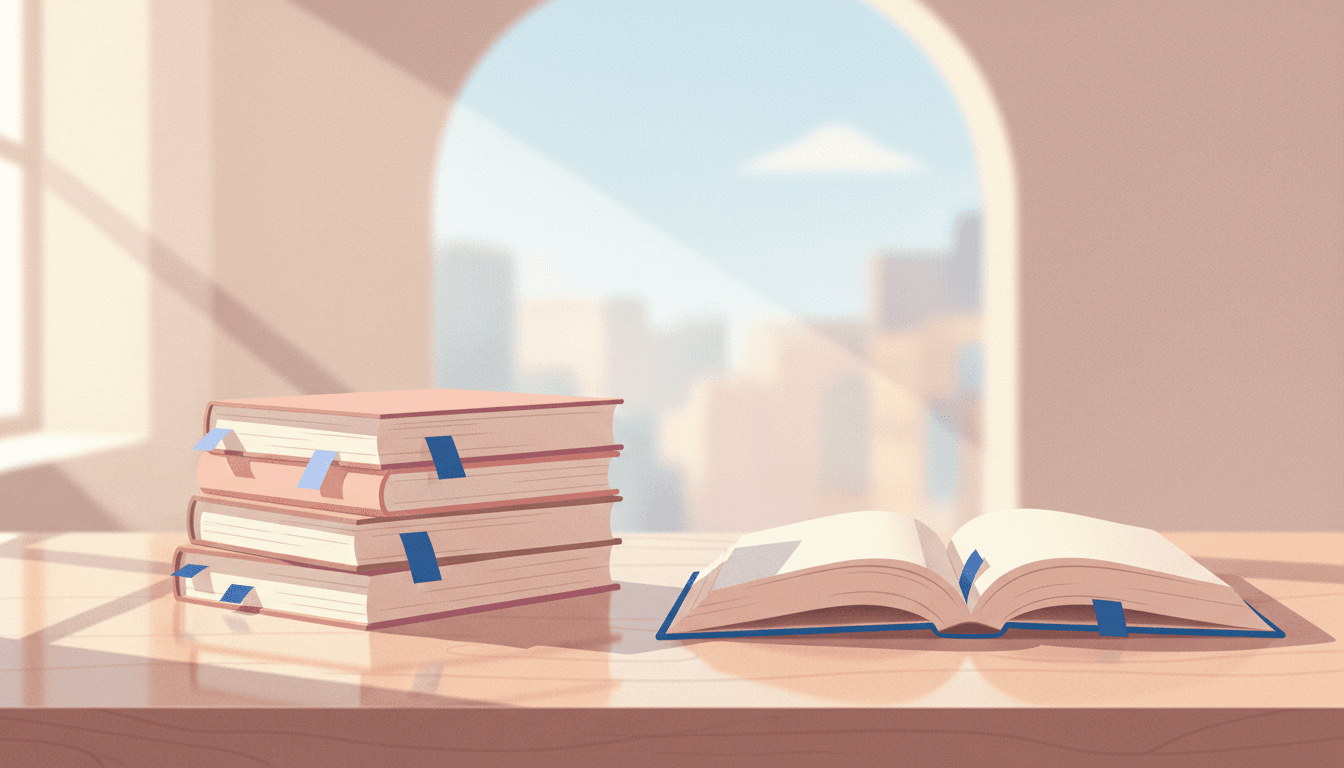
For years I thought highlighting a book was the same as remembering it. You underline a line that lands, feel that little click of recognition, and turn the page. Then a month later someone asks what the book was actually about, and you've got a vague sense that it was good and maybe one anecdote. That was me and a whole shelf of books I couldn't really summarise.
The thing that finally changed it for me is spaced repetition for reading. Instead of letting highlights sit in a book I'll never reopen, I bring a small number of them back over the following weeks, spaced further apart each time, so they move from something I read once to something I actually know.
What spaced repetition actually is
The idea comes from language learning, and if you've ever used Anki to drill vocabulary you already know the shape of it. Back in the 1880s a psychologist named Hermann Ebbinghaus ran memory experiments on himself and found something a bit depressing. Most of what you learn drops out of your head within days unless you revisit it. His forgetting curve is steep. You lose the majority of a new thing in the first week.
Spaced repetition works with that curve instead of fighting it. You review something just as you're about to forget it, then leave a longer gap before the next review, then a longer one again. Each time you successfully recall it, the memory gets stronger and buys you more time. A few short reviews spread over a month beat one long cram, and it isn't close.
Why it's harder for books than for flashcards
Flashcards are built for this. A question on one side, an answer on the other, and the act of recall is baked in. Book highlights are not that. A highlight is usually a nice sentence, not a prompt, and re-reading a nice sentence is passive. You nod, you recognise it, you don't actually retrieve anything. Recognition feels a lot like knowing, but it's much weaker.
Paper makes it harder again. Most of the tools that do this well, Readwise and the various Kindle highlighters, live in the digital world. If you read on a Kindle your highlights sync somewhere a tool can reach them. If you read a physical book, they're stuck on the page. I read a lot on paper, so for a long time I had no good way in.
How I actually do it
The system I've landed on is deliberately small, because anything fiddly I just quietly stop doing. It looks like this.
- Highlight less. I only mark the lines I'd genuinely want to meet again, maybe five or six a book. If everything is highlighted, nothing is.
- Turn the highlight into a question. Not the sentence itself, a prompt that forces me to recall it. A highlight about habit stacking becomes something like: what's the trick for attaching a new habit to one you already have?
- Space the reviews out. I look at a book's prompts a few days after finishing, then a couple of weeks later, then a month or two after that. Three or four passes and most of it has stuck.
- Keep it to a few minutes. If a review session starts to feel like homework, the whole habit collapses, so I cap it hard.
Turning a highlight into a question is the step that matters most, and the one people skip. It's the difference between re-reading and remembering. It's also a bit of effort, which is honestly why I didn't always keep it up by hand.
The tools, and the gap for paper
If you read digitally, you're spoiled for choice. Anki is free and powerful if you don't mind building your own cards. Readwise pulls your Kindle and article highlights and feeds them back to you on a schedule, and it's about as close to automatic as this gets. There are browser highlighters that do the same for what you read online.
Paper is the gap. Photographing a highlight, typing it out, writing a prompt from it, then setting up some kind of review schedule is a lot of manual steps, and every extra step is a place to give up. That gap is the reason I'm building annote, a small app that lets you photograph a highlight from a physical book, turns it into a card, and brings the cards back on a spaced schedule so paper reading gets the same treatment Kindle already has. It's still coming together, and I mention it only because it's the exact itch this post is about.
None of this needs an app, to be clear. A notebook and a calendar reminder will do the job. The app just removes the typing.
What I don't bother remembering
One thing that took me too long to accept: you don't need to remember every book. Some are for the evening, and forgetting them is fine. Spaced repetition for reading is worth the effort for the handful of books you actually want to carry with you, the ones that change how you think about something. For the rest, reading them and letting them go is a perfectly good outcome.
So I'm selective now. A few prompts from the books that earned it, reviewed a few times over a couple of months, and I remember far more than I did back when I was dutifully highlighting everything and revisiting none of it.
If you take one thing from this, make it the questions. Turn your best highlights into things you have to recall, space them out, and keep the whole habit small enough that you'll actually keep doing it. That's most of the battle. The rest is just showing up a few times before your brain files it away for good.
annote
Your paper books, remembered. Snap a highlight and annote turns it into a card you can search and review, so the best lines don't stay trapped on the shelf.

More from the devlog.
Voice memo journaling: what works, and where it quietly falls apart
I used my phone's voice recorder as a journal for a year. Capturing thoughts was easy. Reading them back was where voice memo journaling quietly fell apart, and here is what I do about it now.
How to find the best time to call someone across time zones
The weekly call home kept slipping, and "sorry, did I wake you" got old fast. Here is how I find the best time to call across time zones now, after years of getting it wrong while living abroad.