Sunrise alarm clock apps: a gentler wake-up without the lamp
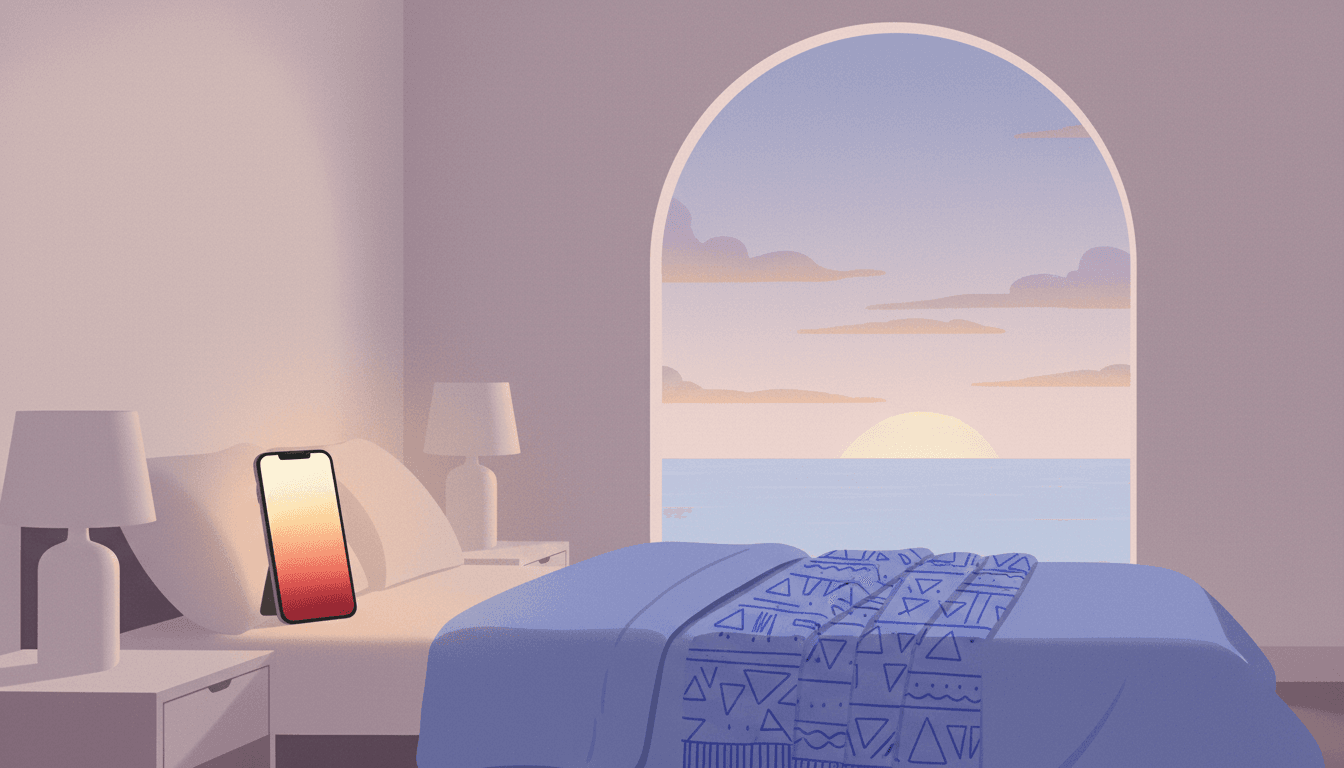
The alarm I used for years was a sound built to make you resent mornings. That rising electronic beep, from black silence to full volume in about two seconds, in a room with the blackout curtains doing their job. I would jolt awake with my heart going, fumble for the phone, and start the day already annoyed. It took me an embarrassingly long time to wonder whether waking up had to feel like that. A sunrise alarm clock app was the thing that finally changed it, and not in the way I expected.
I move around a lot. The last few years have been co-living and working remotely across Korea, Taiwan, Japan, Thailand and Indonesia, so it is a new room every few weeks and a new set of curtains that either block everything or nothing. The one constant is waking somewhere unfamiliar, in the dark, to whatever alarm I set the night before. The wake-up matters more to me than it would to someone who has slept in the same bedroom for ten years.
I had heard about wake-up lights for ages, the bedside lamps that glow brighter and brighter to ease you awake, the kind Philips and a dozen others make. Friends swore by them. But I kept not buying one, and it took me a while to be honest about why.
What a sunrise alarm actually does
The idea behind any sunrise alarm, lamp or app, is simple. Instead of yanking you out of sleep with a sound, it brings light up slowly over ten, twenty, thirty minutes before the alarm, roughly the way real dawn does. Your body reads the growing light and eases toward the surface, so by the time any sound plays you are already in a lighter stage of sleep. Waking feels like being nudged rather than shoved.
I won't dress this up as science I have run myself. Waking to a sound alone drops you straight into full alert. Waking to light that has been building for a while feels like you were already half on your way up, and the sound is just the last small push. Fewer mornings that start with a jolt.
Why I didn't want to buy a wake-up light
So if the lamps work, why not just get one? A few reasons, all practical rather than principled.
- Cost. A decent wake-up light is not cheap, and I already own a phone with a screen that lights up. Paying the better part of a hundred dollars for a second glowing object on the nightstand felt hard to justify.
- It is one more thing to own. I travel with one carry-on and I am fussy about what earns a place in it. A bedside lamp is precisely the kind of thing that does not.
- It stays home. Even if I bought one, it would live in a drawer in a country I am not currently in. The mornings I most want a gentle start are the disorienting ones in a new place, which is exactly where the lamp would not be.
That last one is the real killer. The device is bolted to a bedroom, and my life is not. Whatever solved this had to be the thing already in my hand every night, which is the phone.
How a sunrise alarm on your phone works
This is where the phone turns out to be quietly good enough. A sunrise alarm clock app uses the screen, and sometimes the torch, as the light source. You set your alarm as normal, and the app starts brightening the display a while before it, from a dim red or orange up through to a paler white, imitating a sunrise. When the wake time arrives the sound comes in on top, but the light has already been working on you.
A good gradual wake up alarm lets you choose how long the light takes to build. Fifteen minutes is gentle, half an hour gentler still. You prop the phone up so the screen faces you, not face-down on the mattress, and let it work while you sleep. Once it is set you forget it is happening, until you notice your mornings feel less brutal.
The honest limits of a phone sunrise alarm
Here is where I have to be straight, because a phone is not a lamp and pretending otherwise would be daft. A dedicated wake-up light is genuinely brighter, and it is built to throw that light across a room. A phone screen, even at full brightness, is a small panel a foot or two from your face. On a dark winter morning it is a gentle nudge and little more. If you need a proper blast of light to surface, or you are fighting real jet lag after crossing eight time zones, a phone screen alone will not do the heavy lifting. Actual daylight, and a proper lamp if you need one, still win that fight.
There are smaller catches too. The phone has to be plugged in, since running a bright screen for half an hour before the alarm eats the battery. And it has to sit where the light reaches you, not buried under a pillow. A wake up light app only works with the light it gets to your eyes, so where you put the phone matters more than any setting inside it.
None of that stopped it being worth it for me. But I would rather you know the ceiling before you expect too much of a screen.
A modest wake-up you have with you beats a brilliant one sitting in a drawer on another continent.
How I set it up
This is also why it ended up baked into Meridian Clock, the alarm and world clock I build. I wanted the gentle wake-up to be part of the alarm rather than a separate gadget, so it has a gradual sunrise wake-up built in. You set an alarm, turn the sunrise on, and the screen eases up before the sound. That is the frictionless version I was after. No extra hardware, no second app, just the alarm doing a kinder job.
Two things about it matter more because of how I live. Because Meridian lets you anchor an alarm to a city, the gentle wake-up follows me across time zones instead of me rebuilding it every time I land. And a safety net alarm sits before important events, so on an early-flight morning I get the soft sunrise start and a firmer backstop, rather than trusting a slow glow to get me to the airport. The app keeps its settings on your device, with no account, which is how I think a clock should work anyway.
A gentler wake-up you could try tonight
If harsh mornings are wearing on you and you are not sure a lamp is worth it, try a sunrise alarm clock app on your phone first. It costs nothing to test, and you will know within a week whether a slower wake-up suits you.
- Pick a light ramp of at least fifteen minutes. Shorter than that and you barely notice the build.
- Plug the phone in and prop it facing you, on the nightstand with the screen toward the bed, not flat on the mattress.
- Keep a real sound as a backup. The light is the nice part, the sound is what guarantees you actually wake. Don't switch it off.
- Open the curtains a crack if you can. Real dawn, where you get it, does more than any screen, and the app just covers the mornings that are still dark.
After a fortnight you will have a decent sense of whether gentle waking is for you. If it is, and you want the brighter version, buy the lamp knowing it will earn its place. If the phone is enough, you have solved it for the price of an app and a spot on the nightstand. Either way you have stopped being launched out of sleep by a beep, which is a low bar I somehow lived below for years.
I still wake up in unfamiliar rooms most months. The difference now is that the light comes up first, wherever I am, and mornings feel a little less like an ambush. Meridian Clock is the alarm and world clock I built for exactly this kind of moving-around life. It's coming to Google Play.

Meridian Clock
An alarm and world clock for living across timezones. Anchor an alarm to a city and it stays on that city's time when you travel, with the weather and your next meeting right there when it rings.

More from the devlog.
How to do morning pages without writing a word
I failed at morning pages for years, and it was never the writing. It was the handwriting. Here is how to do morning pages by voice, on a walk, so the habit finally sticks.
Voice memo journaling: what works, and where it quietly falls apart
I used my phone's voice recorder as a journal for a year. Capturing thoughts was easy. Reading them back was where voice memo journaling quietly fell apart, and here is what I do about it now.